AI Remarketing in Digital Marketing: How to Re-Engage Customers and Increase Conversions
Summary
Remarketing is a digital marketing strategy that helps businesses reconnect with people who have already interacted with their website, app, social media page, or online content but did not complete a desired action, such as making a purchase or filling out a form. Instead of targeting completely new audiences, remarketing focuses on people who already know something about the brand.For example, if someone visits an online clothing store, checks a few products, and leaves without buying anything, the brand can later show that person relevant advertisements while they browse other websites or social media platforms. These reminders can encourage the customer to return and complete their purchase.Remarketing is useful because customers often need more than one interaction with a brand before making a decision. When used properly, it can improve brand recall, increase conversions, and make advertising campaigns more effective.
Introduction
In today's digital world, customers see hundreds of advertisements every day. Because of this, getting someone's attention once is not always enough to turn them into a customer. A person may visit a website, look at a product, read a blog, or add an item to their cart but leave without taking action.This is where remarketing becomes important.Remarketing allows businesses to reach people who have already shown interest in their products or services. Instead of starting the marketing process from zero, businesses can continue the conversation with an audience that is already familiar with their brand.For example, imagine a student visits a digital marketing institute's website and checks its SEO course page. The student may not register immediately because they want to compare other courses. Later, they may see an advertisement from the same institute on Instagram, YouTube, or another website. This reminder can bring the student back to the course page.Remarketing is therefore not simply about showing the same advertisement repeatedly. A good remarketing strategy provides relevant messages based on what the user previously did.
What Is Remarketing?
Remarketing is a marketing technique used to reconnect with people who have previously interacted with a business online.These interactions can include:Visiting a websiteViewing a particular productAdding a product to a cartStarting but not completing a formWatching a videoInteracting with social media contentDownloading a resourceVisiting a specific landing pageThe main objective is to remind these users about the brand and encourage them to take the next step.Remarketing is sometimes called retargeting, although the exact terminology can vary between advertising platforms. The basic idea is the same: reach an audience that has already shown interest.How Does Remarketing Work.
How Does Remarketing Work?
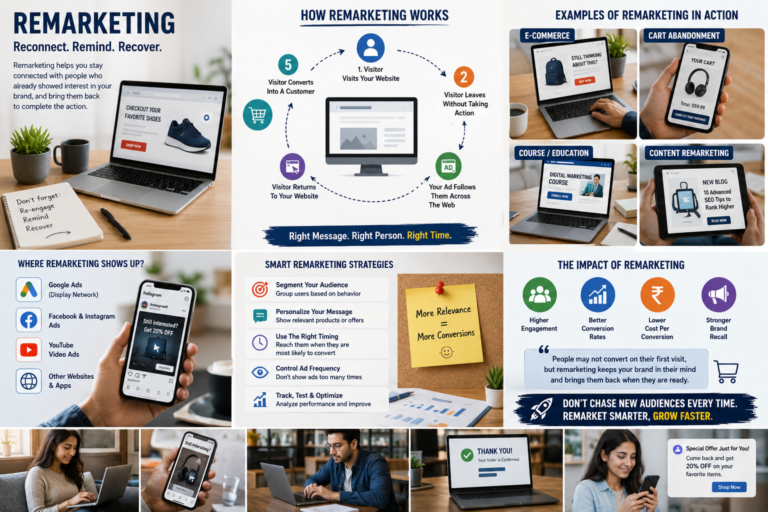
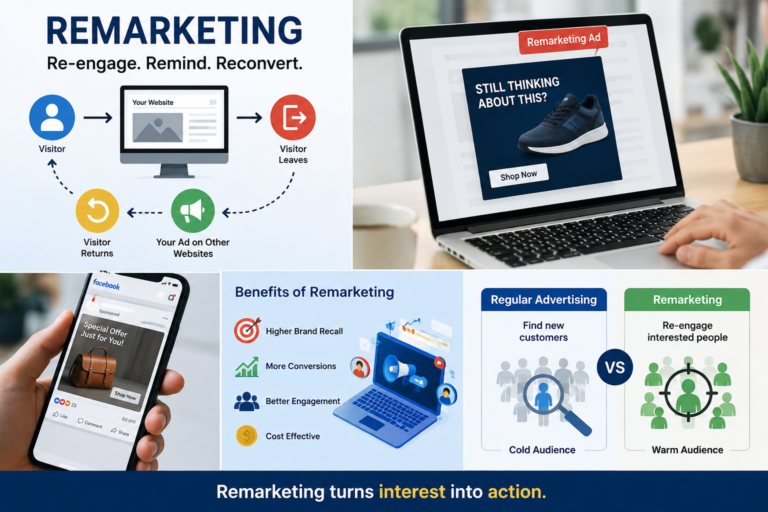
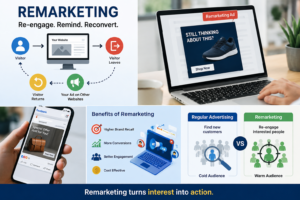
Remarketing generally works through audience tracking and advertising platforms.First, a person visits a website or interacts with a digital property. With appropriate consent and privacy-compliant tracking, the business can identify certain actions or audience segments.The business can then create an audience based on those actions. For example, it could create separate groups for:People who visited the websitePeople who viewed a productPeople who added a product to their cartExisting customersPeople who completed a purchaseAfter creating these audience groups, marketers can show relevant advertisements to selected users through supported advertising platforms.The important part is relevance. A person who only visited a homepage should not necessarily receive the same message as someone who added a product to their cart.
Why Is Remarketing Important?
Remarketing is valuable because customers do not always make decisions during their first visit.There can be many reasons why someone leaves a website:They are still comparing options.They are not ready to purchase.The price is higher than expected.They want to discuss the decision with someone.They become distracted.They want to research the product first.Remarketing gives businesses another opportunity to communicate with these potential customers.It can also improve brand recall. When people repeatedly see a relevant brand message, they may be more likely to remember the business when they are ready to make a decision.Remarketing Examples1. E-Commerce RemarketingSuppose a customer visits an online fashion store and views a pair of shoes but does not purchase them.The store can later show a relevant advertisement featuring the same product or similar products.The message could encourage the customer to return and explore the product again.2. Cart Abandonment RemarketingA customer adds products to an online shopping cart but leaves the website before completing the order.The business can create a remarketing campaign specifically for cart abandoners.This audience is often more valuable than a general website visitor because the customer has already demonstrated stronger purchase intent.3. Course or Education RemarketingA student visits a digital marketing course page but does not submit the registration form.The institute could later show an advertisement highlighting course benefits, practical training, certification, or an upcoming enrollment deadline.The objective is to bring the student back to the website.4. Content RemarketingA person reads a blog about SEO but does not download a related guide.A business can later show content related to SEO, such as an advanced guide, webinar, or educational resource.This approach can move users from simple awareness toward deeper engagement.
Types of Remarketing
There are several ways businesses can use remarketing.Website Remarketing:
Targets people who previously visited a website or specific pages.Social Media Remarketing:
Targets people who interacted with a brand's social media content, depending on the platform's available audience features.Search Remarketing:
Can be used to reach previous website visitors in relevant search advertising campaigns where supported.Video Remarketing:
Targets people based on previous interactions with video content or video channels, depending on platform capabilities.Email Remarketing:
Uses email communication to re-engage existing subscribers or customers, such as reminding users about an unfinished action.Remarketing vs. Regular AdvertisingThe biggest difference is the audience.Regular advertising often tries to reach people who may be interested in a product or service but have not interacted with the brand yet.Remarketing focuses on people who have already interacted with the brand.For example:Regular advertising:
"People interested in digital marketing — discover our course."Remarketing:
"You checked out our digital marketing course. Ready to learn more?"The second message is more personalized because it is based on previous interaction.
Benefits of Remarketing
Remarketing offers several benefits to businesses.1. Better Audience Relevance
The audience has already shown some level of interest.2. Improved Brand Recall
Remarketing keeps the brand visible to potential customers.3. More Conversion Opportunities
Users who left without completing an action can be encouraged to return.4. Better Campaign Efficiency
Businesses can create different messages for different audience segments rather than showing everyone the same advertisement.5. Personalized Marketing
Messages can be adjusted according to previous user behavior.Best Practices for RemarketingA successful remarketing campaign requires more than simply showing advertisements repeatedly.Segment Your Audience:
Create different groups based on user behavior.Use Relevant Messages:
Show content connected to the user's previous interaction.Avoid Excessive Ad Frequency:
Showing the same advertisement too many times can annoy users and create a negative experience.Use Different Creatives:
Test different images, headlines, offers, and calls to action.Set Conversion Exclusions:
If someone has already completed the desired action, consider excluding them from campaigns designed to generate that same conversion.Respect Privacy:
Remarketing should follow applicable privacy, consent, and advertising-platform requirements.Common Mistakes in RemarketingOne common mistake is showing the same advertisement to every visitor. A first-time visitor and a cart abandoner are at different stages of the customer journey.Another mistake is excessive ad frequency. If users see the same advertisement again and again, they may become irritated.Poor audience segmentation can also reduce campaign performance. Marketers should understand what users did before deciding what message to show next.Finally, businesses should not ignore privacy and consent requirements. Responsible data practices are an important part of modern digital marketing.
Conclusion
Remarketing is an effective digital marketing strategy for reconnecting with people who have already interacted with a brand. Instead of focusing only on finding new customers, it gives businesses another opportunity to engage people who have already shown interest.From e-commerce stores and educational institutes to service businesses and content websites, remarketing can be used in many industries. It can help improve brand recall, increase engagement, and create additional conversion opportunities.However, successful remarketing depends on relevance and responsible execution. Businesses should segment their audiences, create useful messages, control ad frequency, and respect user privacy.In simple words, remarketing means giving interested customers another reason and opportunity to come back.
Call to Action (CTA)
Don't let interested customers disappear after one visit. Start using remarketing to reconnect with your audience, bring potential customers back to your website, and create more opportunities for conversions. Start planning your remarketing campaign today!