Nepal Flood 2026: Causes, Impact and Latest Updates
Introduction
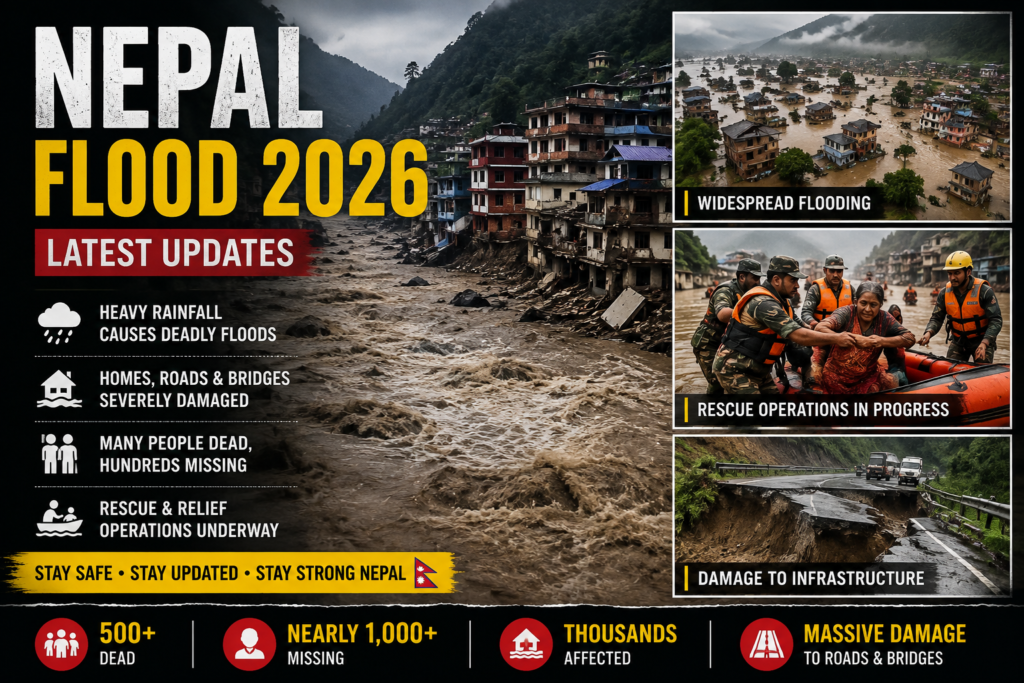
IntroductionNepal Flood 2026 has become a serious natural disaster, affecting communities, homes, roads and other important infrastructure. Heavy rainfall and rapidly rising rivers can cause dangerous flooding, putting lives and property at risk. The situation has also created challenges for transportation, communication and rescue efforts.This blog explains the causes of the Nepal Flood 2026, its impact on people and affected areas, the damage caused, and the ongoing rescue and relief efforts. The aim is to provide simple and easy-to-understand information about the situation and help readers understand why flood preparedness and safety are so important.
What Happened in the Nepal Flood?
What Happened in the Nepal Flood?On 26 August 2026, a devastating flash flood struck Nepal’s Rasuwa district near the Nepal–China border. The disaster began when a large glacier and rock collapse sent huge amounts of ice, mud, rocks and water into the Lhende Khola/Bhote Koshi river system. The sudden surge moved rapidly downstream and caused severe flooding. (Reuters)The flood damaged homes, roads, bridges, hydropower facilities and other infrastructure across affected areas. Several communities along the river valleys were badly hit, while rescue teams faced difficulties because of damaged roads, heavy debris and unstable mountain conditions. (AP News)The disaster also resulted in a very large number of deaths and missing people, with the figures continuing to change as rescue and recovery operations progress. By 30 August 2026, reports were putting the death toll at more than 700, with over 3,000 people still missing. (Reuters)In Simple WordsGlacier collapse → huge flow of ice, rocks and mud → sudden river surge → flash flood → destruction of homes and infrastructure → large-scale rescue and relief operations.Rescue teams, including Nepal’s security forces, continue searching for survivors and missing people, while authorities are also monitoring the rivers for the possibility of further flooding. (Reuters)
🌊 The Bhote Koshi River and the Nepal Flood
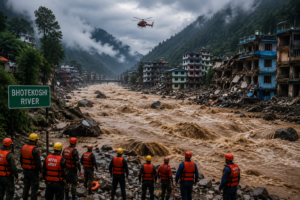
The Bhote Koshi River played a central role in the Nepal Flood 2026. A sudden surge of water entered the river from the Tibetan side on 26 August 2026, creating a powerful flash flood in the mountainous areas of Rasuwa.The fast-moving floodwater carried mud, rocks and debris, damaging houses, roads, bridges and hydropower facilities along the river corridor. The flood then moved downstream through the Trishuli River, increasing the risk for communities in other districts.Because the Bhote Koshi flows through a narrow and mountainous valley, the sudden rise in water was extremely dangerous. Rescue teams and authorities had to work quickly to evacuate people and search for those who were missing.
What Damage Did the Floods Cause
The Nepal Flood 2026 caused widespread destruction, especially along the Bhote Koshi and Trishuli river corridors. Floodwater, mud, rocks and debris damaged homes, roads, bridges and other important infrastructure.
(World Health Organization)
Major Damage Caused by the Floods
Homes and buildings: Many houses and buildings were severely damaged or completely destroyed. A rapid satellite assessment found hundreds of buildings in the Timure and Syapru Besi areas affected. (IHP Water Information Network System)
Roads and bridges: Several roads and bridges were washed away, making transportation and rescue operations extremely difficult. (AP News) Hydropower projects: Hydropower facilities along the river were badly damaged, with some facilities reported destroyed. (IHP Water Information Network System)
Health facilities: Flooding damaged health posts and affected access to hospitals, creating additional problems for injured and displaced people. (World Health Organization)
Schools and public facilities: Schools and other public infrastructure were also affected, disrupting normal life for local communities. (Nepal Mission) People and communities: Thousands of people have been affected, displaced or separated from their families, while rescue teams continue searching for missing people.
In Simple WordsThe flood did not only damage homes. It also destroyed roads, bridges, hydropower facilities and public services, leaving many communities isolated and making rescue and relief work much harder. (World Health Organization)
WHAT ARE AUTHORITIES MONITORING NOW?
After the devastating Nepal Flood 2026, authorities are keeping a close watch on the situation because there is still a risk of additional flooding.
🌊 Key Things Being Monitored
Bhote Koshi River water levels: Officials are closely monitoring changes in the river because water levels have risen again in some areas.Bhote Koshi River water levels: Officials are closely monitoring changes in the river because water levels have risen again in some areas.
Downstream rivers: Authorities are watching the Bhote Koshi–Trishuli river system and downstream areas for any sudden rise in water levels.
The newly formed lake: A natural blockage upstream has created a lake. Authorities are monitoring it because a sudden breach could send another large surge downstream
Weather and rainfall: Continued rain could increase the risk of more flooding and landslides
Rescue and relief areas: Teams are monitoring damaged areas and evacuation routes so that rescue operations can continue safely.
Further landslides and debris flows: Mountain slopes remain unstable, creating an additional danger for communities and rescue workers.
NEPAL FLOOD 2026 CONTENT CLUSTER
If you are creating a complete content cluster around this topic, the main article can work as the pillar topic.
PILLAR TOPIC
Nepal Flood 2026
SUPPORTING TOPICS
.What Caused the Nepal Flood 2026?
.Nepal Flood Latest Update
.Nepal Flood Damage and Rescue Operations
.Glacial Collapse and Flash FloodsHow Flash Floods Happen
This follows the pillar and supporting-topic structure from your Blog Clusterization PDF. One broad topic can have several connected supporting topics.
SEO AND CONTENT STRUCTURE FOR THIS BLOG
The focus keyphrase for this blog is:
Nepal Flood 2026
It is used naturally in important areas such as:
.SEO title
.URL
.Meta description
.Introduction
.Main heading
.Relevant content sections
The keyword is not repeated in every paragraph because the Yoast guidance recommends natural keyword placement instead of keyword stuffing.
✅ Quick SEO Checklist – Nepal Flood 2026
Focus Keyword: Nepal Flood 2026
SEO Title: Nepal Flood 2026: Causes, Impact, Latest Updates & Safety Tips
Slug: nepal-flood-2026
Meta Description: Nepal Flood 2026: Know the latest updates, major causes, impact on people, affected areas, and important safety measures.
Featured Image: Nepal Flood 2026
Image Alt Text: Nepal Flood 2026 showing severe flooding, damaged infrastructure and rescue operations
Keyword in Introduction:
Keyword in Headings:
Internal Links: Add 2–3 relevant blog links
External Links: Add trusted sources such as government/official organizations
Mobile-Friendly:
Page Speed: Check before publishing
Table of Contents: Recommended
FAQ Section: Recommended
⭐ Final SEO Goal
Clear content + useful information + natural keyword usage + optimized image + good readability = SEO-friendly Nepal Flood 2026 blog.
Conclusion
The Nepal Flood 2026 has caused serious damage to communities, homes, roads, bridges and other important infrastructure. The situation around the Bhote Koshi River shows how quickly a sudden rise in water can become dangerous, especially in mountainous areas.
Rescue and relief teams are continuing their efforts to help affected people and search for those who are still missing. Authorities are also monitoring river water levels, rainfall, landslides and other possible flood risks.
The disaster highlights the importance of early warnings, proper planning and quick evacuation during extreme weather events. For people living in flood-prone areas, staying informed and following official safety instructions can help protect lives.
Nepal Flood 2026 is not only a story of destruction, but also a reminder of the importance of preparedness, rescue efforts and community support.
📢 Call to Action (CTA)
Stay Informed, Stay Safe
Want to stay updated about the Nepal Flood 2026, weather conditions, rescue operations and important safety alerts? Keep following our latest updates and share this information with your family and friends.
Stay connected. Stay alert. Stay safe.