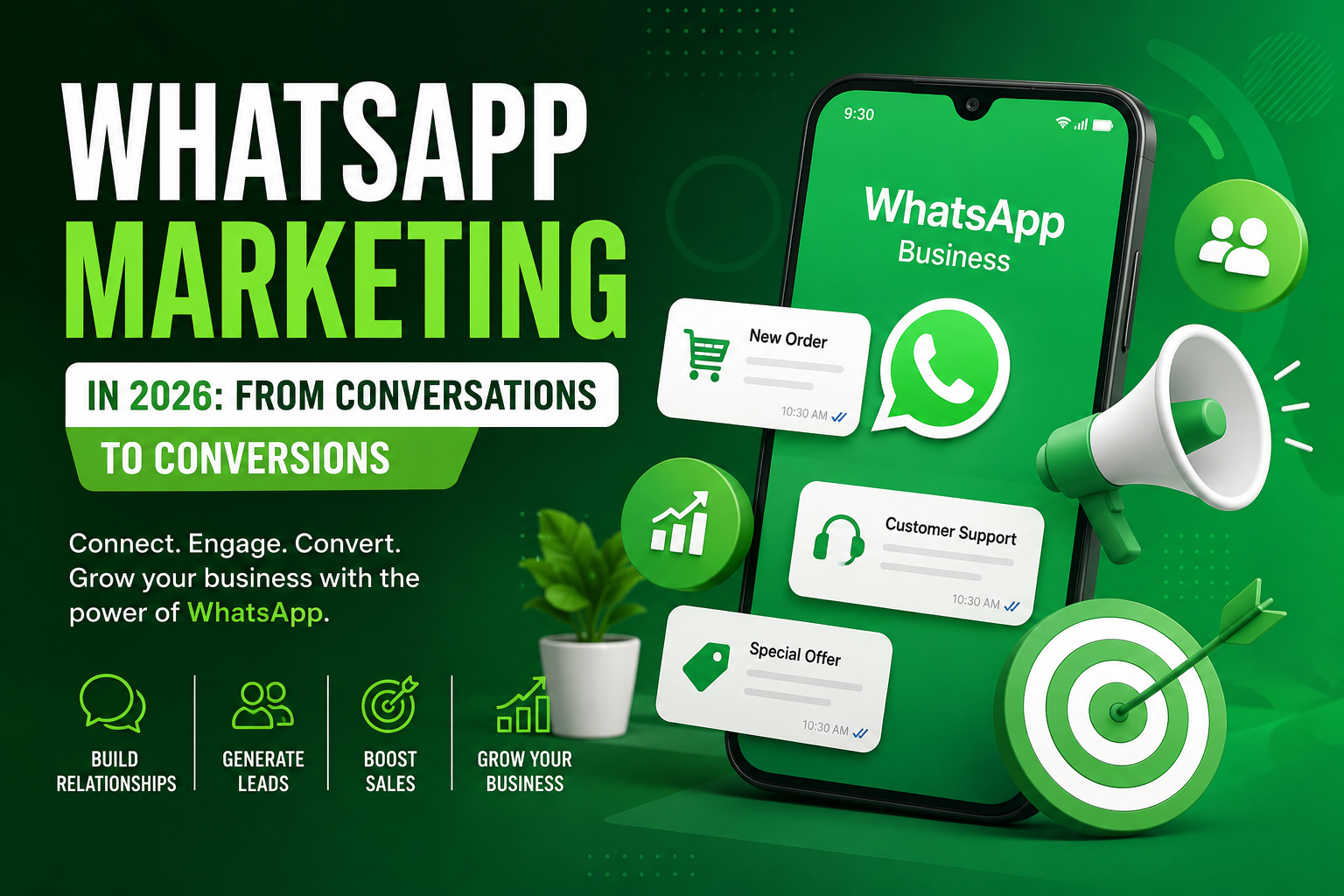
WhatsApp Marketing in 2026: From Conversations to Conversions
Introduction
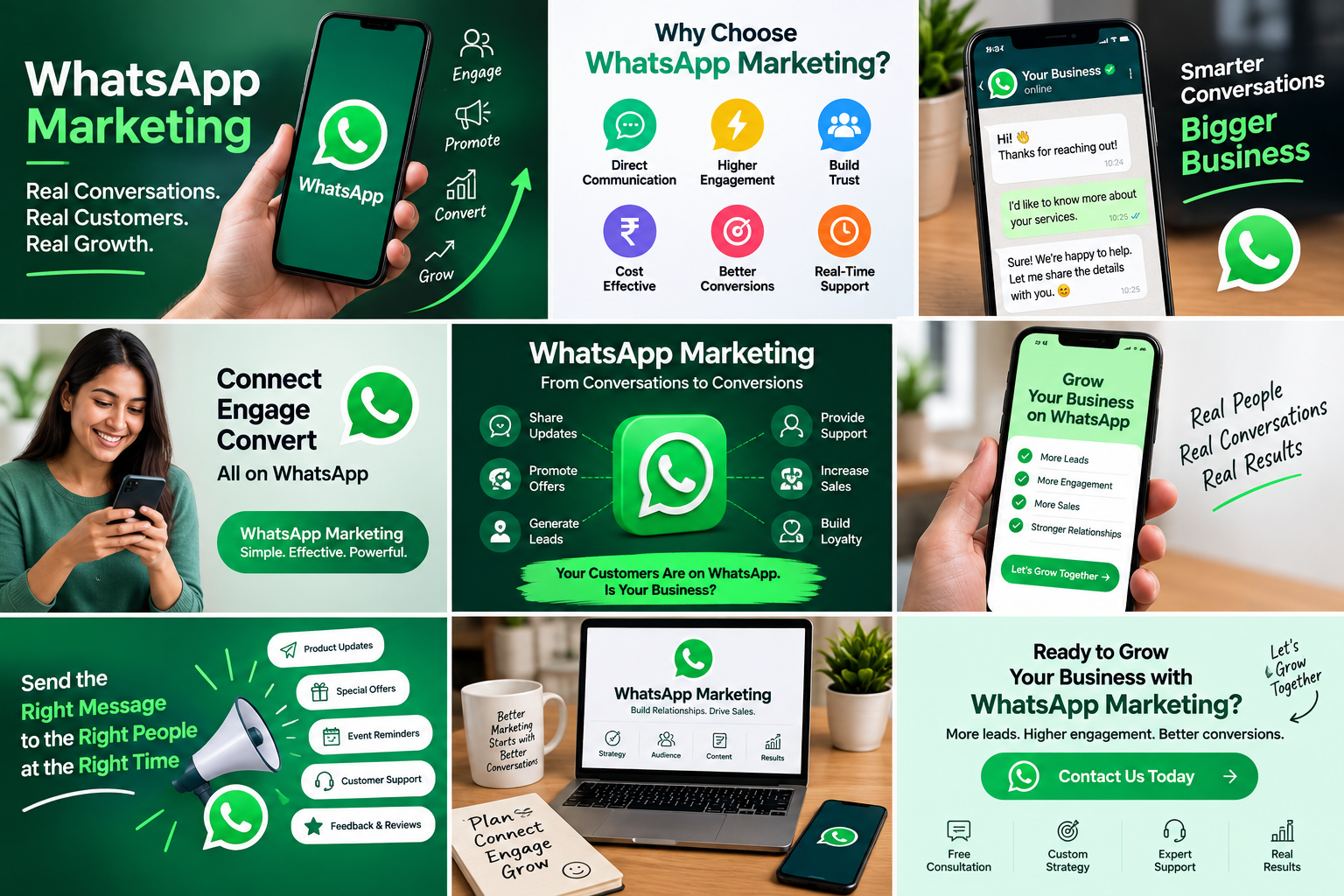
In 2026, businesses are looking for faster and more personal ways to connect with their customers. Traditional advertising can create awareness, but customers often want direct communication before making a purchase. This is where WhatsApp Marketing becomes valuable.
WhatsApp allows businesses to communicate with customers through messages, product information, offers, customer support, and personalized conversations. Instead of sending customers through multiple platforms, businesses can use WhatsApp to create a simple journey from conversation to conversion.
For small businesses, startups, e-commerce brands, service providers, and digital marketers, WhatsApp can become an important part of a modern marketing strategy
What Is WhatsApp Marketing?
WhatsApp Marketing is the use of WhatsApp to promote products, services, offers, and brand communication while maintaining direct contact with customers.
Businesses can use WhatsApp for:
Customer communication
Lead generation
Product promotion
Customer support
Offers and discounts
Appointment reminders
Product updates
Feedback collection
Personalized marketing
The biggest advantage is direct communication. Instead of depending only on search engines or social media feeds, businesses can communicate with customers through a channel they already use regularly.
Why Is WhatsApp Marketing Important in 2026?
Customer expectations are changing quickly. People want quick answers, personalized communication, and convenient buying experiences.
WhatsApp Marketing can help businesses meet these expectations
1. Direct Customer Communication
WhatsApp creates a direct communication channel between a business and its customers. Customers can ask questions, request information, or discuss products without leaving the conversation.
This can make the buying process easier and more personal.
2. Faster Lead Generation
A potential customer may see an advertisement but still have questions before buying. A WhatsApp button can give that customer a direct way to contact the business.
For example:
Advertisement → WhatsApp Chat → Customer Question → Product Recommendation → Purchase
This simple process can help businesses turn interested visitors into leads.
3. Personalized Marketing
Customers do not always respond to generic advertisements. Personalized messages can be more relevant because businesses can communicate according to customer needs and interests.
For example, an online clothing store can send different product recommendations to customers based on their previous interactions
4. Better Customer Support
Customer support is an important part of marketing. A customer who receives quick and useful assistance is more likely to develop trust in a brand.
WhatsApp can be used for:
Order-related questions
Product information
Appointment confirmation
Delivery updates
Complaint handling
Frequently asked questions
5. Increased Sales Opportunities
Businesses can use WhatsApp to share relevant products, offers, and recommendations. When communication is timely and useful, it can encourage customers to take action.
6. Stronger Customer Relationships
Marketing is not only about making a sale. Long-term success also depends on customer relationships. Useful updates, personalized communication, and responsive support can help businesses build trust.
How to Create a WhatsApp Marketing Strategy
A successful WhatsApp Marketing campaign needs planning. Follow these steps to create a simple and effective strategy
Step 1: Define Your Target Audience
First, identify who you want to reach. Understand their needs, interests, problems, and buying behavior.
For example, a fashion business may target young shoppers, while a local education company may focus on students and parents.
Step 2: Set a Clear Goal
Decide what you want your campaign to achieve
Your goal could be:
Generate leads
Increase sales
Promote a new product
Improve customer support
Increase repeat purchases
Share important updates
A clear goal makes it easier to measure campaign performance
Step 3: Create Useful Content
Avoid sending messages only when you want to sell something. Provide content that is useful to your audience.
You can share:
Product tips Educational
information New product
announcements Special offers
Helpful guides
Event reminders
Customer support information
The goal should be to provide value rather than constantly sending promotional messages.
Step 4: Personalize Your Messages
Personalization can make communication more relevant. Use customer information appropriately and divide your audience into relevant groups.
For example, existing customers and new leads may need different messages.
Step 5: Use a Clear Call to Action
Every promotional message should have a clear next step.
Examples include:
Shop Now
Contact Us
Book Your Demo
Get a Quote Learn
More Ask a Question
A simple call to action can help customers understand what they should do next.
WhatsApp Marketing for Small Businesses
Small businesses can particularly benefit from WhatsApp Marketing because it can create a direct connection with customers.
A local business can use WhatsApp to announce new products, inform customers about offers, answer questions, and encourage repeat purchases.
For example, a clothing store could send customers a message about a new collection and invite them to ask about sizes or availability.
The strategy should remain customer-focused. Sending too many irrelevant messages can reduce engagement and make customers ignore future communication
This is a title
Common WhatsApp Marketing Mistakes
Sending Too Many Messages
Frequent messages can annoy customers. Focus on relevance and timing instead of quantity.
Using Only Promotional Content
If every message asks customers to buy something, your audience may lose interest. Mix promotional content with useful information.
Ignoring Customer Questions
WhatsApp is a conversational platform. If customers receive a message but do not receive a response when they reply, the experience can become frustrating.
Poorly Written Messages
Keep messages simple, clear, and easy to understand. Short paragraphs and simple language improve readability, which is also an important on-page SEO principle.
Keyword Stuffing in Supporting Blog Content
If you are writing a blog about WhatsApp Marketing, use the focus keyword naturally. The SEO guide recommends placing it in important areas such as the title, URL, meta description, first 100 words, headings, and image ALT text rather than repeatedly inserting it unnaturally.
WhatsApp Marketing and SEO
WhatsApp itself is a communication channel, but your WhatsApp Marketing strategy can work together with SEO and content marketing.
For example, you can publish a blog explaining a product or service and share that blog with interested customers through WhatsApp.
When optimizing the blog, use a clear H1, relevant H2 sections, and H3 subsections where necessary. The provided SEO guide recommends using only one H1 and organizing the rest of the content with H2 and H3 headings.
You should also create a short, clean URL and an informative meta description. The guide recommends a meta description of around 150–160 characters and a short URL containing the focus keyword.
The Future of WhatsApp Marketing
WhatsApp Marketing is moving beyond simple promotional messages. Businesses can use conversational communication to guide customers throughout their buying journey.
The future of marketing is increasingly focused on personalized experiences. Customers want fast answers, relevant information, and convenient communication.
Businesses that combine useful content, timely conversations, personalization, and strong customer service can create better experiences.
However, successful WhatsApp Marketing is not about sending the maximum number of messages. It is about sending the right message to the right customer at the right time.
Conclusion
WhatsApp Marketing provides businesses with a direct and conversational way to connect with their audiences. From lead generation and promotions to customer support and relationship building, it can become an important part of a modern digital marketing strategy.
To get better results, businesses should define their audience, set clear goals, create valuable content, personalize communication, and use strong calls to action. They should also avoid excessive messaging and focus on providing genuine value.
If you are creating a blog about WhatsApp Marketing, follow basic on-page SEO practices such as keyword research, an optimized title, clean URL, meta description, proper heading structure, optimized images, internal and external links, readable content, and mobile-friendly design.
In simple words, effective WhatsApp Marketing is about starting conversations, providing value, building trust, and turning those conversations into meaningful customer relationships and conversions.
call to action
Turn conversations into customers with a smart WhatsApp Marketing strategy. Connect with your audience, generate quality leads, promote your products, and increase conversions.
Start your WhatsApp Marketing journey today! Contact us now and discover how WhatsApp can help your business grow.
👉 Get Started Today | Contact Us | Get a Free Consultation